
How to feel lovable
The first in a series of short scenes on the subject of why we sometimes find it so hard to take up emotional space.

Recently, suffering with back pain, I went to see my osteopath. At the end of the session she asked, as they always do, ‘How do you feel now?’ To which I replied, ‘Yes, that’s feeling better,’ even though I couldn’t honestly tell you it was, but I didn’t want to disappoint her.
Later that day, I received a question from a client who asked,
‘I often feel I need to earn my place at work and in relationships. How can I be comfortable taking up space?’
I told her that you need first to find a way of acknowledging that you are just as important as everyone else, but it was framed with the trepidation that comes from knowing it’s an endeavour that can take years before you even feel you’re making good progress, especially when you’re unpicking a lifetime of believing something different.
Today, I’m beginning a short series of pieces, written over the past decade or more, on the subject of taking up emotional space. What makes it hard to take our place in the world, what does it look like, and how might we change it?
An evening in early November. The phone rings.
‘Graham, I’ve fallen. I’m on the floor and I can’t get up.’
‘OK mum. I’m coming now.’
My mother is lying prone in the room where I grew up eating all of my meals. Home for lunch from primary school there would be fish fingers and chocolate pudding, then the lengthy ‘chicken casserole period’ every Sunday for months on end. Latterly, after I’d left home, I would visit and watch her finding a small space to eat on the kitchen table, crammed full now with papers, notes and empty envelopes.
The wardrobe, always incongruous in a kitchen and never used for coats, stood next to the glass fronted dresser on top of which lived ‘the sweet tin’ that we would, as children, reach up and grab hold of, shaking it first to make sure there was something inside, only to be disappointed by an uninspiring half eaten bag of mints once we’d prised off the lid
Everything still looked the same, and was always the same. Even the tin of oxtail soup, dating from the 1980s, and wedged into one end of the worktop to stop it collapsing, a tinned-condiment-shaped family heirloom we would, absurdly, find hard to dispose of after her death.
Now the paramedics are marching through the house, echoing down the hallway where I used to whizz my toy cars up and down, chipping the paint on the skirting board, and swearing my innocence.
Pulled up into a chair and covered in blankets my mother is engineered through the hallway past the grandfather clock and the stand at the foot of the stairs on which there would always be fresh flowers, their perfume the only scant consolation when you wanted to be on the phone to your girlfriend for hours on end, but doing so meant standing in the freezing cold without anywhere to sit because the phone was on the wall away from any heat source.
Wheeled out into the night as my sister and I watch from the house.
I imagine my mother knew she was going to die, because she always knew things.
She is gently lifted down the two steps at the front of the house for the last time, past the low wall where I used to climb and watch for my dad coming home from the station on summer evenings.
She calls out to my sister,
‘I love you Clare.’
And that was it.
A moment of what seemed at the time like clarity around all the struggles I had wrestled with over the years but which was, I only came to realise much later, nothing of the sort.
My ‘what about me?’ on that November night became less of a question for my late mother and more of a call to action for myself. A painful moment would eventually prove to be my saviour.
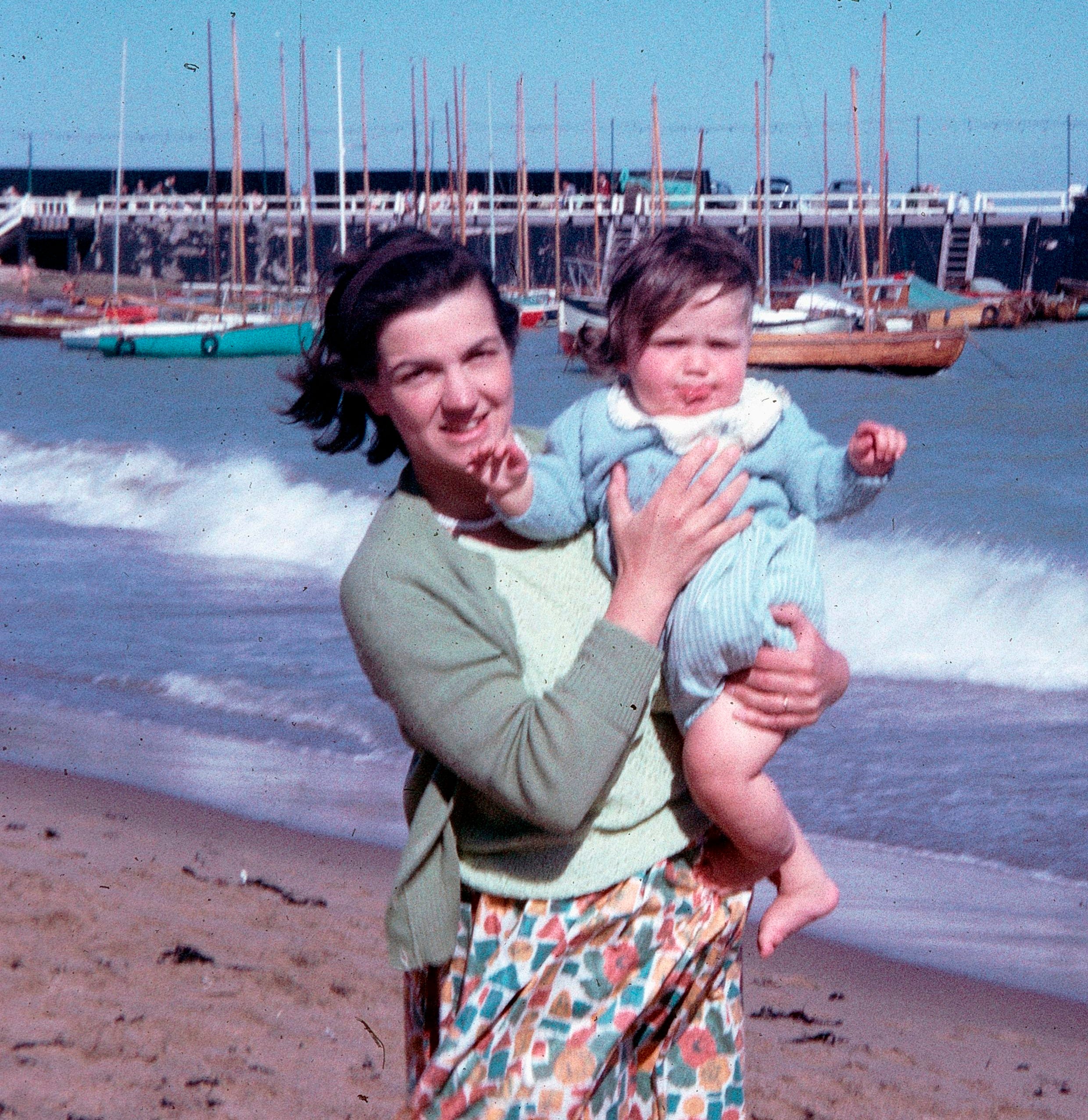
Before I was born there were pictures taken of my parents together, laughing and looking as if they loved one another. There were other pictures of days out at the seaside with my brother and sister, my father in singlet looking relaxed and happy, my siblings playing in the sand.
After I arrived, there were no pictures of them together, no family holidays and no days out. For a long time, I wondered if I was somehow to blame.
On ‘Sideways’ this week, we’re discussing how to break bad news. We also wonder about the wisdom of having an Only Fans account if you work in education, and hear about a missing giraffe.
That’s all for this week.
Thanks for being here, I appreciate you.