
Why comparison is pointless
The last in my short series of scenes on the subject of taking up emotional space.

My therapist pauses, then asks,
‘Where does your self-esteem come from?’
I look out through the window into his lush green garden and at the woodlands beyond, wishing myself amongst the trees.
At that time, I didn’t know where my self-esteem came from, I just knew that there wasn’t much of it, so this was an important day, one where I learned there are only three places from which any of us can derive a sense of self-worth.
Intrinsically, from simply knowing you’re OK.
Reflectively, because of what others say about you.
Comparatively, by looking at those around you and deciding how you measure up.
‘It comes from the second and third ones,’ I tell him, while staring at the cricket ball on top of the television set in the corner and marvelling at the idea self-worth can be generated rather than gifted.
I had been placing the control of my happiness in the hands of other people, where it wasn’t safe. It had to stop.
Many years later, after I’d trained as a therapist, I encountered another step-change in the way I thought about self-esteem and how comparison can be used to create or destroy it.
During a training course, which I remember little about other than eating my lunch on a park bench from where, to my disproportionate joy, I could see the uppermost parts of the Post Office Tower, the idea was posited that self-esteem itself is a pointless construct.
The tutor presented his straightforward theory.
‘Whatever you do, you can never be more or less valuable than you already are.’
As much as I struggled to embody the idea, I embraced it with alacrity. It was like receiving an invite to the most wonderful party I still felt unworthy of attending.
The notion that I need not ‘do’ or ‘be’ anything in order to feel valuable challenged a seemingly unbreakable link between achievement and significance.
I knew both to be important, but I hadn’t realised one was not dependent on the other.
I had heard clients use phrases like,
‘I know there are a lot of people worse off than me.’
But this diminishing of their own pain was pointless, because discomfort is never comparable.
During my darkest, longest days, the ones on which suicide just seemed pragmatic, I found an article in the newspaper about a man who was the sole carer for his disabled son and middle-aged wife with early-onset dementia. The expectations placed upon him were constant. There was literally no respite and he was drowning. It sounded horrific.
I cut out the article and carried it with me in my wallet in the mistaken belief that constant reference to and acknowledgement of ‘I know there are a lot of people worse off than me’ would make a material difference to my own sorry state.
What actually happened was that I started to feel guilty about being unable to shift my emotional pain even in the face of something that seemed, by all reasonable measure, to be so much worse.
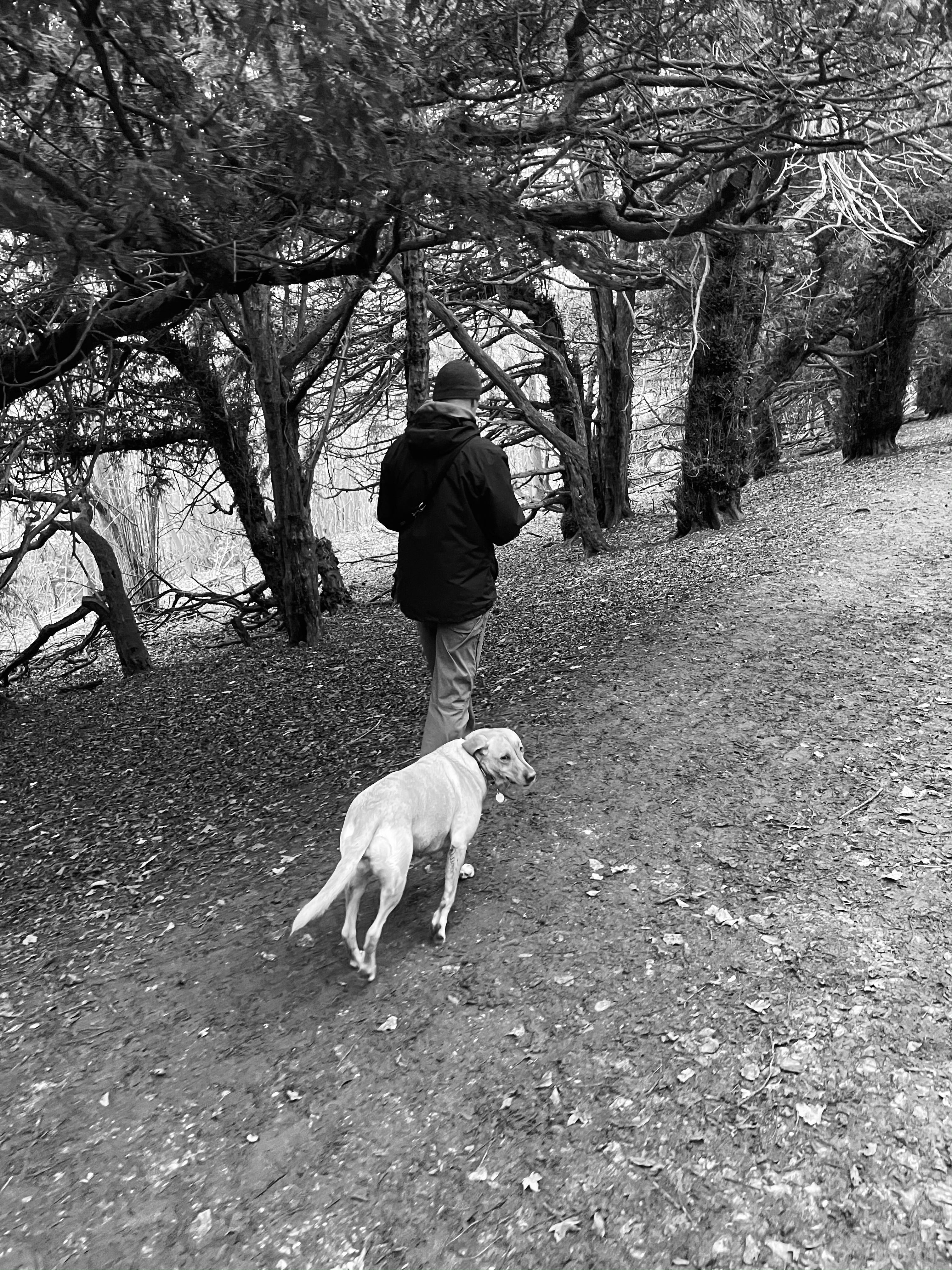
When my dog, then still only six, developed a lameness that lasted for weeks, it became a source of anxiety and distress to see an animal I love so dearly unable to run about with her usual abandon.
After eye-wateringly expensive investigations, her diagnosis marked a change in the life we enjoy together, and it took some adjustment.
Taking her on a shorter and more sedate walk across the fields one day we passed a poodle with a leg missing trotting happily along next to her owner.
There was a time I would have held that image in my head believing it to be a valuable comparison and a reminder to count my blessings. But these days I try and let sadness flow where it chooses, find gratitude where it shows itself, and have faith that optimism and hope will find a way to stay just in front.
The latest episode of Sideways is available now. This week, we’re talking about the dangers of going on holiday early in recovery. We also wonder whether headbanging has gone out of fashion, and Martin suffers a mishap that prevents him from seeing Uriah Heap.
Sideways is taking a break until September.
That’s all for this week.
Thanks for being here, I appreciate you.
I’ll leave you with this from the wonderful musician and storyteller, Glen Hansard, who died this week.